Mana Obscura

Menu
  • Home
  • Guides
    • Site Guide
  • About
    • About Us
    • About the Author
    • My Characters
    • What I’m Playing
  • Contact
Menu

Tag: battle.net

Blizzard Engineering – The Nuggets from Blizzcon 2018

Posted on November 6, 2018April 3, 2023 by Gazimoff

If I had to pick a favourite panel from Blizzcon, Blizzard Engineering would be near the top. Hearing how the various programming teams overcome technical challenges to produce games with incredible polish is always interesting, particularly as their passion always comes through in their enthusiasm on-stage.

While there was only the one session this year, the Blizzard Engineering panel at Blizzcon 2018 still had a few interesting tidbits. Compared to last year’s deep tech examination, this year saw more of a focus on engineering culture, quality approach, and delivery methodology. There was a clear demonstration that it’s not just about problem-solving, but collaborating as part of a team that’s becoming increasingly important.

However, if I had to ask for one thing for 2019, it would be to repeat a request for more discussion around architecture. System componentisation came up a few times during the panel, but yet there was never an explanation of why it’s important or what value it provides. Likewise, many of the questions were from hopefuls looking for advice on getting a job at Blizzard, indicating a strong need for a separate careers fair at the event.

Before I get into a summary of the panel, I’d like to give a little attribution to those on-stage:

  • Somer Esat (Panel Chair) – Senior Engineering Manager, Overwatch
  • Rachelle Davis – Senior Software Engineer, New project. Previously an original member of the Hearthstone team, and has been with Blizzard for 7.5 years
  • Bruce Wilkie – Principal Software Engineer, Overwatch. Specialist in game engine and graphics rendering.
  • Diane Cochran – Lead Engineer, New project. Previously lead on Blizzard’s approach to Continuous Integration, lead on battle.net desktop app. Worked on authentication, public API, and has been with Blizzard for 8 years.
  • Collin Murray – Lead Software Engineer on WoW. Has written code for Diablo, Starcraft, Warcraft III, and every version of WoW. Been with Blizzard for 23 years.
  • Sarah Doebler – Technical Lead Battle.net. Started as a GM, has worked on Blizzard.com, the Armoury, and Content platform. Now leads tools team on battle.net, and has been with Blizzard for 14 years.

Continue reading “Blizzard Engineering – The Nuggets from Blizzcon 2018”

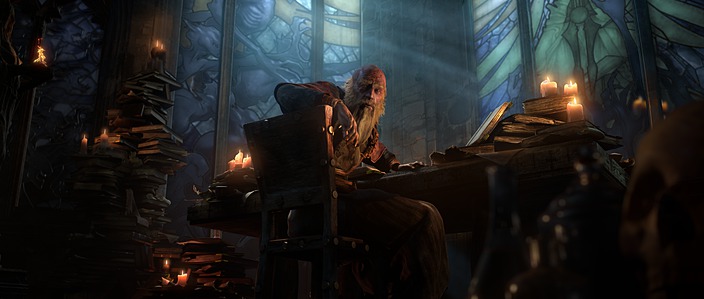
The Next Diablo: a Hybrid and Mobile MMO?

Posted on December 23, 2017 by Gazimoff

Earlier this week, MMORPG.com’s Suzie Ford made the bold claim that Blizzard wanted to show something new at Blizzcon 2017. Instead of majoring on Battle for Azeroth, the next expansion for World of Warcraft, her theory suggests that CEO Mike Morhaime wanted to introduce something new. That unannounced title? A new Diablo MMO.

It certainly sounds plausible. After a rough launch, Diablo 3 managed to redeem itself with the Reaper of Souls update, going on to sell some 30 million copies worldwide, so there’s definitely appetite for more. Beyond that, Blizzard has been hitting the job market hard, advertising for a Production Director with MMO experience to bring ‘the Diablo franchise into the future.’

However, it’s not all clear-cut. Blizzard’s also been hiring for a mobile RTS MMO project. Again, this is an unannounced title, but the studio also wants Unity expertise (the same engine used to power Hearthstone). Question is, are these job ads for the same game, or does Big Blue have two games in the pipe? The answer, frustratingly, might be yes and no. The next Diablo might be Blizzard’s biggest bet yet – going in-home and on mobile within the same grand experience.

This is Blizzard’s chance to release a title that dominates on all platforms – PC, console, and smartphone – with a unified world that enables players to hop from one to the other. In a single swipe, hybrids like Destiny 2 and Anthem look antiquated by comparison. The studio might not have been ready to share its vision on the Blizzcon stage, but there’s already plenty of hints about the direction being taken.

Continue reading “The Next Diablo: a Hybrid and Mobile MMO?”

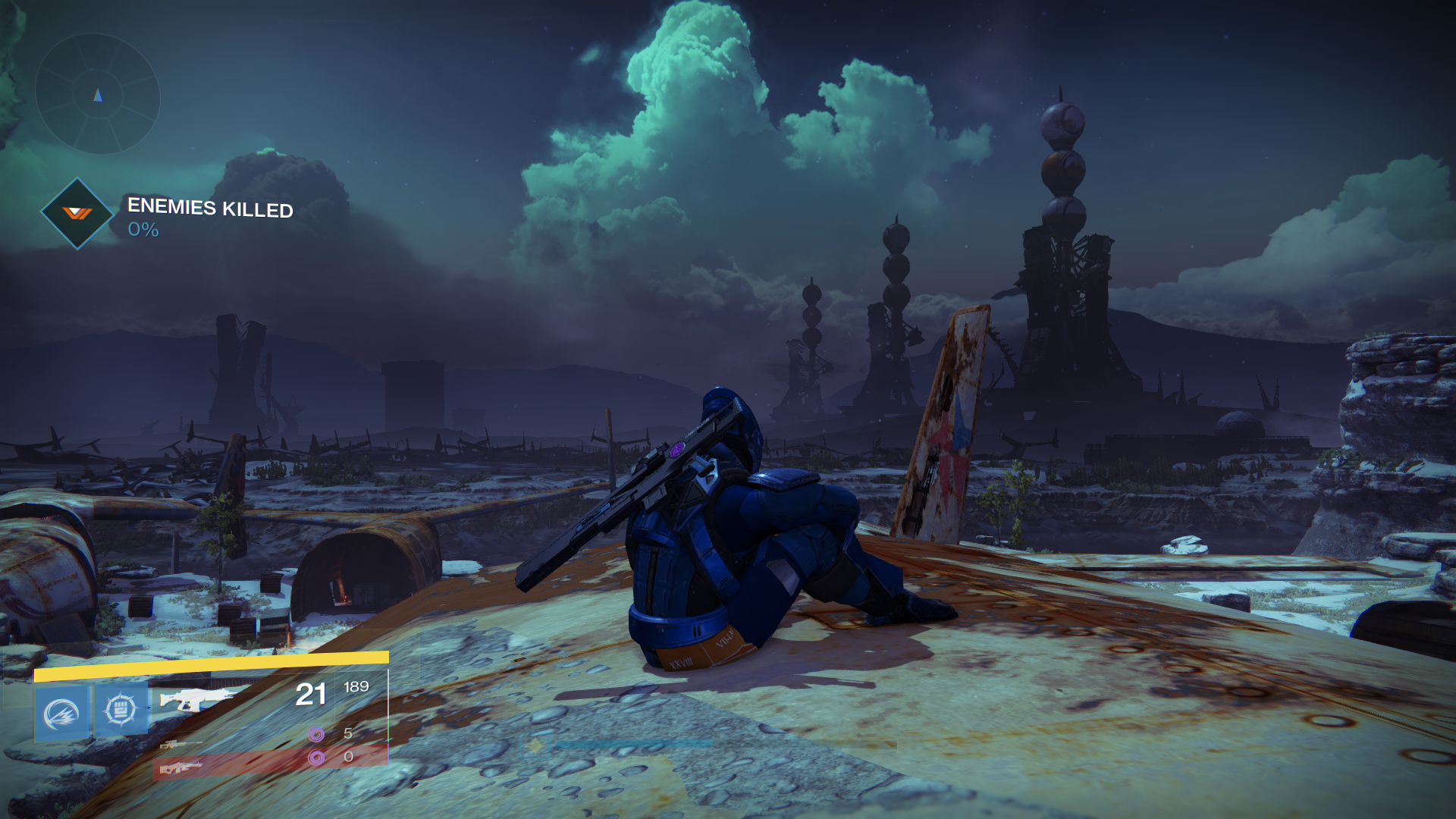
That Destiny 2 PC Banwave

Posted on October 26, 2017 by Gazimoff

On Tuesday 24th October, Destiny 2 finally launched on PC. One of the most anticipated releases of the year, Bungie’s platform debut became gained even more interest following an incredibly successful beta test. By all accounts, the open-world FPS performed brilliantly and looked gorgeous on a wide range of hardware.

Unfortunately, much of that goodwill came crashing down with reports of a rapid and reactionary banwave. According to a statement from Bungie, roughly 400 players had their accounts forcibly revoked after that first day, some after only playing for a few hours. The developer stated that its actions were necessary to remove those “who were using tools that pose a threat to the shared ecosystem of the game.”

I appreciate that Bungie wants to protect the integrity of its game, but there are several problems that I have with the way they carried out this action.

Continue reading “That Destiny 2 PC Banwave”

Destiny 2: Cautious Optimism

Posted on August 27, 2017 by Gazimoff

Destiny 2 is right around the corner. For console players, just a few short weeks remain before launch day. PC gamers will have to wait until late October for their turn, but the open beta this week should help soften the blow. It’s a time to check system requirements, clean out drive space, and ponder on that preorder.

And yet, Destiny 2 is not a ‘must buy’ for me. Not yet, at least. My experience of the original Destiny was a triumph of missed expectations – I’d hoped for a deep and involving storyline that took us to fantastic places, and instead we got a mediocre script and lacklustre voice acting. Once the shrink-wrap sheen wore off, it slid into the ‘some-other-time’ shelf, next to my PS4 copies of Battlefield 4 and Final Fantasy XIV.

Still, I’d keep coming back. About six months ago, I hauled the console out from under the TV and into my home office, just so I’d feel more compelled to fire it up and get some games in. I picked up the expansion pack for Destiny, which improved the experience hugely, and progressed up to level cap. There’s still more of the saga for me to complete, but I feel like I’m getting the gist of Bungie’s vision now. It’s just a shame it took so long for me to get there.

Which is why I decided to check out the Destiny 2 beta on PS4 earlier in the year, and why I’ll be trying out the PC beta later today. I much prefer using mouse and keyboard for first-person-shooters, plus I have a much bigger network of friends on Battle.net ready to play alongside. Besides, there’s a meaty Nvidia 1080Ti and 4K monitor just waiting to devour all of those glorious pixels.

Continue reading “Destiny 2: Cautious Optimism”

MMOs: The Changing Social Context

Posted on February 17, 2012 by Gazimoff

When I started playing MMOs there was a general feeling that the game itself was the social hub. You’d log in and chat to people while playing the game, making new friends in the process. The game would support everything from building a core network of friends through to being able to group up and defeat tough content together. For many of us, the game world also represents our social world.

All this is changing. As our preference shifts from one game to another we’re faced with two options: try and take our social network with us or abandon it and build a new one. As Azuriel mentioned in the comments last week, this continual relationship building can become frustrating. In the absence of portable social tools in our MMOs, many of us are turning to low-friction networks like Twitter instead.

But are MMO developers missing a trick here, or should they accept that gamers are migrating their social networks away from the games?

Continue reading “MMOs: The Changing Social Context”

Getting Real About Idents

Posted on May 11, 2010 by Gazimoff

Battle.Net Real ID Logo

Social gaming has been kicking around for a while. Anyone with a Facebook account knows what it’s like to be flooded with requests to join some game or another. Usually these games are joy-stealing fun vampires, purely designed to drain away any thought you had that they’re designed to entertain you. They thrive on being able to render players into such a catatonic stupor that they’ll pay real cash just to be able to press their buttons more often.

I’d lay odds that one of the big reasons people are turning off from Facebook in their droves (apart from the privacy concerns) is because they’ve had enough of being spammed by a horde of grovelling farmhands or inept Mafioso. The players themselves probably mean well, but finding hundreds of Xeroxed pleas for help is enough to try the patience of a saint. And even though you can ignore everything from one application, there’s soon another that springs up to spew forth a torrent of spam from its drooling mouth. It’s like playing whack-a-mole just to keep on top of it.

There are other ways to pull together a social gaming experience. Both the Xbox and Playstation networks use an ID that you can link to friends with and share messages. You can even use voice chat, see what your friends are playing and team up in games together. It’s a pretty slick experience and one that most gamers seem comfortable with. The key thing though about the setup on consoles is that it’s usually about playing single-player or basic team games. If I share my Xbox Live details with a friend, I’m not sharing details on all the characters I have in Dragon Age: Origins, just the games that I play and the achievements I’ve earned. I’m also using a nickname, not my email address or other information.

So why the big deal about Blizzard’s new RealID system? It initially feels like a good idea, providing players with a way to communicate with each-other no matter what realm, faction or even game you’re playing. Say you’re working on a refer-a-friend alt but a guild needs your help with a raid, it’s now possible for them to get you a message without having to resort to SMS messaging or ventrilo camping.

It’s also a big tool for Blizzard in order to encourage players to subscribe to both Warcraft and their next-gen MMO. One of my own experiences with dabbling in games like Lord of the Rings Online and Age of Conan is that I tended to miss out on things happening in Warcraft. Sometimes this is a good thing, such as when you’re after a break or suffering from burnout. Other times it can be a real hindrance – you become scared to try out your new game in case you miss something in your old one. By having a messaging system that works in both, Blizzard ensures that players can feel comfortably contactable whatever game they choose to play.

The difficulty comes with trying to match up a messaging system with more esoteric concepts, such as how gamers view themselves and their relationships with other gamers. There’s also the problems that arise from how you uniquely identify each player on the network, and how that player shares their identity with others. There are also issues with how gamers view their activities in-game and whether they feel comfortable disclosing those activities.

Gamers have traditionally given themselves aliases for use in the online world. Nicknames like my own are in common use, readily shared and exchanged. It’s how we identify ourselves and how we share that identity with others. The trouble is there are quite often several people who share the same nickname, resulting in names like switchblade6764. Blizzard’s solution was to use the only piece of information they have that’s different for each individual – our email address. In many ways it makes sense – it’s a logical identifier to build a system around. In other ways it’s a nightmare – we might use the same email address for our billing information, or for PayPal, or any one of a number of other systems. It pushes players into a situation where they have to think very carefully about who they would link up with over RealID, which in turn reduces the usefulness of the system as a whole.

As an example, I use a different email address for my guild’s website and other WoW stuff than the one I have linked to my Battle.net account. While my open email address gets tons of Warcraft related phishing emails, I know they’re fake by default because they’re in the wrong inbox. Tying my identity and my email address together removes this security. Personally, I would rather have seen a push towards nicknames instead of the current solution.

The other issue is related to presence and how that presence is handled. To give an example, when I fire up my desktop I’m automatically logged into Messenger. Across the world various people receive little alerts that I’ve come online. What they don’t get is status updates to say I’m checking my email, surfing the net, coding in Visual Studio or doing any of a hundred other activities that I can use my PC for. All they know is that I’m either online or not. And if I choose, I can set myself to “appear offline” and vanish.

The problem with RealID is that it overestimates how much of a social experience gaming really is. It’s true that MMO gamers like to talk to each other and have shared experiences. But it’s also true that sometimes a gamer just seeks peace and solace in a fantasy world, away from other people. By automatically linking a RealID to every character on every server in every game that you have, you remove that opportunity for gamers to have a solo experience in your game. You force gamers to go elsewhere and off your network if they want to play a game without being disturbed, without being watched or followed. It’s this aspect that doesn’t make sense to me, and feels like a strong oversight.

Gaming is evolving into a shared experience because players prefer them and developers want to provide them. It makes sense to try and stretch those shared experiences beyond a single game and into an entire fleet for players to meet and team up in. But it has to be done in the right way, understanding the social nuances and conventions that gamers have established and working with them. By going against these norms, developers risk alienating the very people they hope to bring together.

Recent Posts

  • Discovering Palia
  • WildStar: The End
  • Final Fantasy XIV: Heavensward – The Latecomer Review
  • Blizzard Engineering – The Nuggets from Blizzcon 2018
  • Final Fantasy XIV: A Realm Reborn – The Latecomer Review

Recent Comments

  1. Wanderhoof on Final Fantasy XIV: A Realm Reborn – The Latecomer Review
  2. f2h on Final Fantasy XIV: A Realm Reborn – The Latecomer Review
  3. Peter Parker on Final Fantasy XIV: A Realm Reborn – The Latecomer Review
  4. Ami on Final Fantasy XIV: A Realm Reborn – The Latecomer Review
  5. Slesliat on Final Fantasy XIV: A Realm Reborn – The Latecomer Review

Archives

  • June 2021
  • November 2018
  • February 2018
  • January 2018
  • December 2017
  • November 2017
  • October 2017
  • August 2017
  • December 2016
  • September 2016
  • March 2016
  • January 2016
  • October 2015
  • September 2015
  • March 2015
  • October 2014
  • September 2014
  • August 2014
  • June 2014
  • February 2014
  • November 2013
  • October 2013
  • September 2013
  • August 2013
  • May 2013
  • November 2012
  • August 2012
  • July 2012
  • June 2012
  • May 2012
  • April 2012
  • March 2012
  • February 2012
  • January 2012
  • December 2011
  • November 2011
  • October 2011
  • September 2011
  • August 2011
  • July 2011
  • June 2011
  • May 2011
  • April 2011
  • March 2011
  • February 2011
  • January 2011
  • December 2010
  • November 2010
  • October 2010
  • September 2010
  • August 2010
  • July 2010
  • June 2010
  • May 2010
  • April 2010
  • March 2010

Categories

  • Final Fantasy XIV
  • General Gaming
  • Guest Posts
  • Guild Wars 2
  • Mage Mumblings
  • MMO Musings
  • Site Stuff
  • Star Wars: The Old Republic
  • Uncategorized
  • Warcraft
  • WildStar
© 2026 Mana Obscura | Powered by Minimalist Blog WordPress Theme